Good design is good business. Good culture delivers good design.
Four areas (org structure, team and culture, design process, and design systems plus engineering) and the principles that hold across all four.
Design organization structure
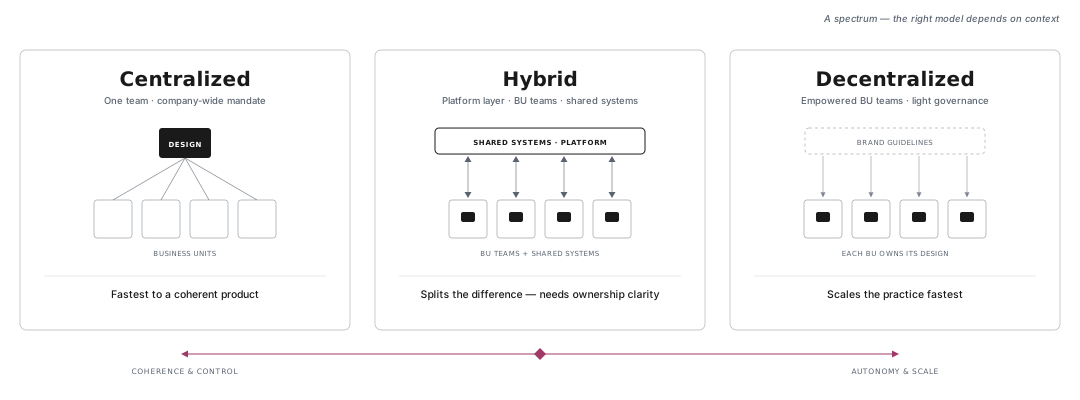
I've operated at scale across three models: centralized (single design team, company-wide mandate), decentralized (empowered teams within BUs, minimal central governance), and hybrid (platform layer plus BU teams with shared systems). The hybrid model works best when the central team is product-minded rather than process-minded: we ship, we don't just set standards. At Cisco, I evolved from decentralized BU operations into true hybrid by positioning the design teams as the driving partner for the centralized platform work.
The key trade-off: centralized control ships a coherent product fastest, decentralized teams can deliver faster, and hybrid splits the difference, but only if you're clear up front about who owns which outcome. I've learned to settle that first before the structure is put in place.
Team, culture, and growth
I've held the same beliefs for a long time. Good design is good business (T.J. Watson Jr.), and good culture is what delivers it. Culture comes from people, so I lead with people over process: keep it light, and change it whenever there's a better way. Hire for performance and growth, not just raw talent. Empower people rather than police them, and give them real ownership. Inclusion tends to follow.
At Cisco I co-created a career development framework with other design leaders — Impact, Knowledge, Behaviors — that let us articulate what growth looked like beyond any one company's title ladder. At ServiceNow, the team operated under similar principles, with one added emphasis: the pace of agentic-era work needs ownership at every level rather than deference to seniority. Retention follows from that: teams with real ownership tend to keep their people.


Known for designing careers, not just products, and for the retention that follows.
Design process and frameworks
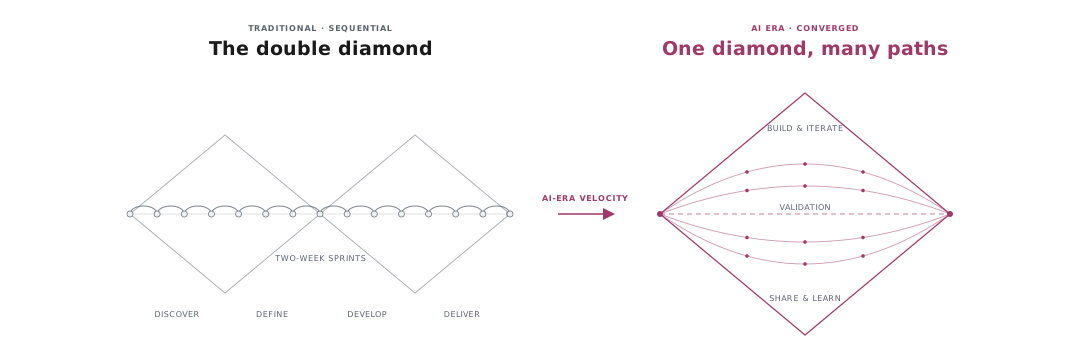
At Cisco, I contributed to the company-wide Design Thinking framework (public methodology, adopted across design, product, engineering). I also pioneered a custom Kanban + Lean UX process that was integrated during Cisco's agile transition. It kept design velocity aligned with two-week sprints without losing the kind of research and strategy work that can't fit a sprint boundary.
The traditional double diamond doesn't hold up in the AI era, where the pace pushes exploration and execution to happen in parallel rather than in sequence. The "one diamond, many paths" framing captures that. At AINPX we built this into the operating model directly: the outcome-aligned workstream model meant teams were shipping features and iterating strategy in the same sprint cycle, with design holding both simultaneously.
Design systems and engineering
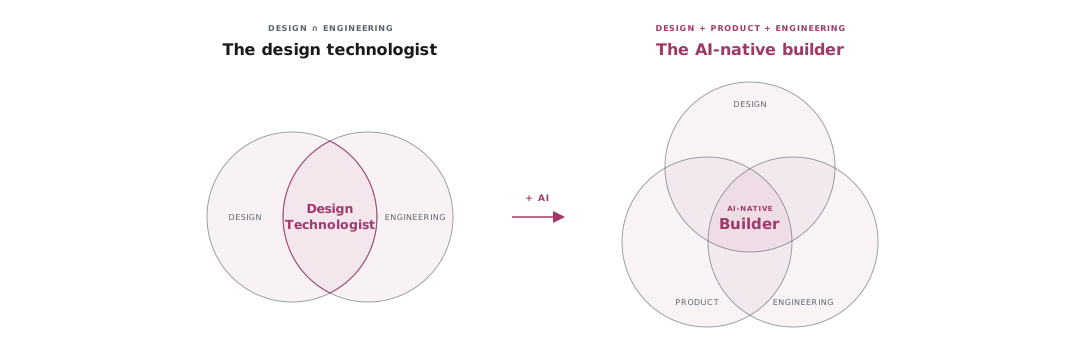
I co-drove Cisco's Momentum Design System and pioneered the Design Technologist / UX Engineering practice as a skunkworks team that became standard practice across the division. The role: designers who see beauty in code, engineers who appreciate impeccable UX, the people who write the code that makes designs real.
At ServiceNow, the next evolution was an AI-powered design creation and enablement framework that let the design system scale at the rate the product does, not at the rate the central team can hand-author patterns. Instead of just documenting patterns, the system generates them and improves as it's used.
From colleagues and teammates
"…believing in my capabilities far beyond my own and giving the right opportunities and responsibilities that I can handle and grow into."
Youna Choi — Senior Product Designer
"He quickly earned my complete trust to understand the most complex issues, create elegant design solutions and lead his team to execution."
Fernando Mousinho — Senior Director, Product Management
"He has the ability to build a compelling and relevant design vision for the product and then work collaboratively to execute it in an incremental manner."
Sachin Patil — Senior Design Manager
"…research, feedback, proposals, concepts, implementation, long hours, and new ideas to furthering the progress of our Momentum Design foundation."
Kevin Smith — Design System Lead
In their own words
"It's been the best team culture I've ever been a part of."
"Everyday I wake up excited to go to work."
"Thank you for leading the kind of team that enjoys spending time together."